
- Look for synchronized multi-view RGB-D with minimum 30 FPS and 50–100Hz proprioception streams.
- Verify that force-torque and tactile feedback are calibrated; visual data alone cannot train contact-rich insertion.
- Check data provenance to guarantee full commercial use clearance without restrictive academic licenses.
- Request a 5–10 episode sample package with full HDF5 or WebDataset schema before committing to bulk datasets.
The Robot Learning Data Bottleneck
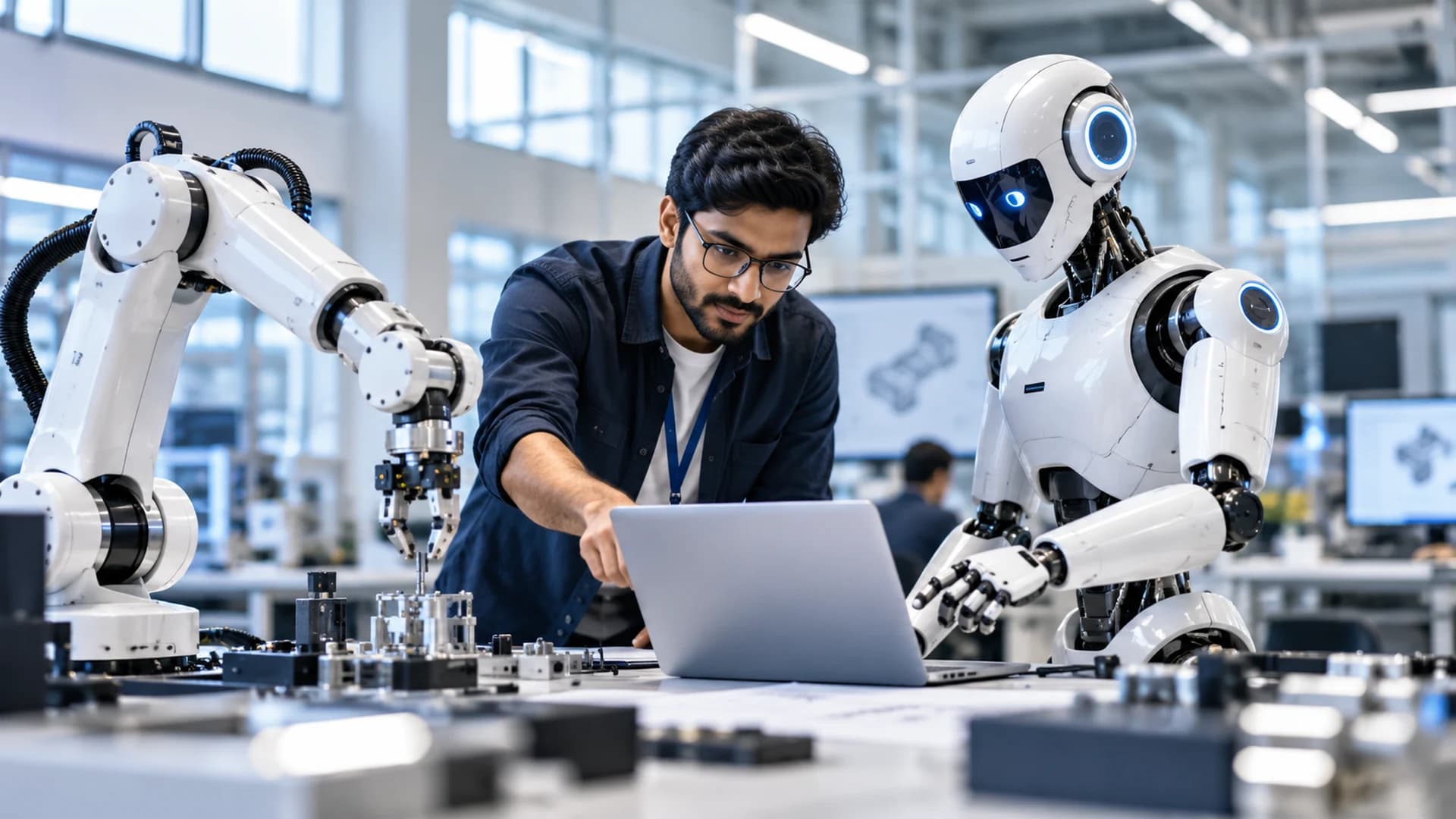
While LLMs trained on trillions of publicly scraped web tokens, robotics has no equivalent 'internet of physical actions.' Robotic manipulation policies (such as Octo, RT-X, and OpenVLA) require paired visual demonstrations, 6-DoF end-effector trajectories, joint angles, and gripper states.
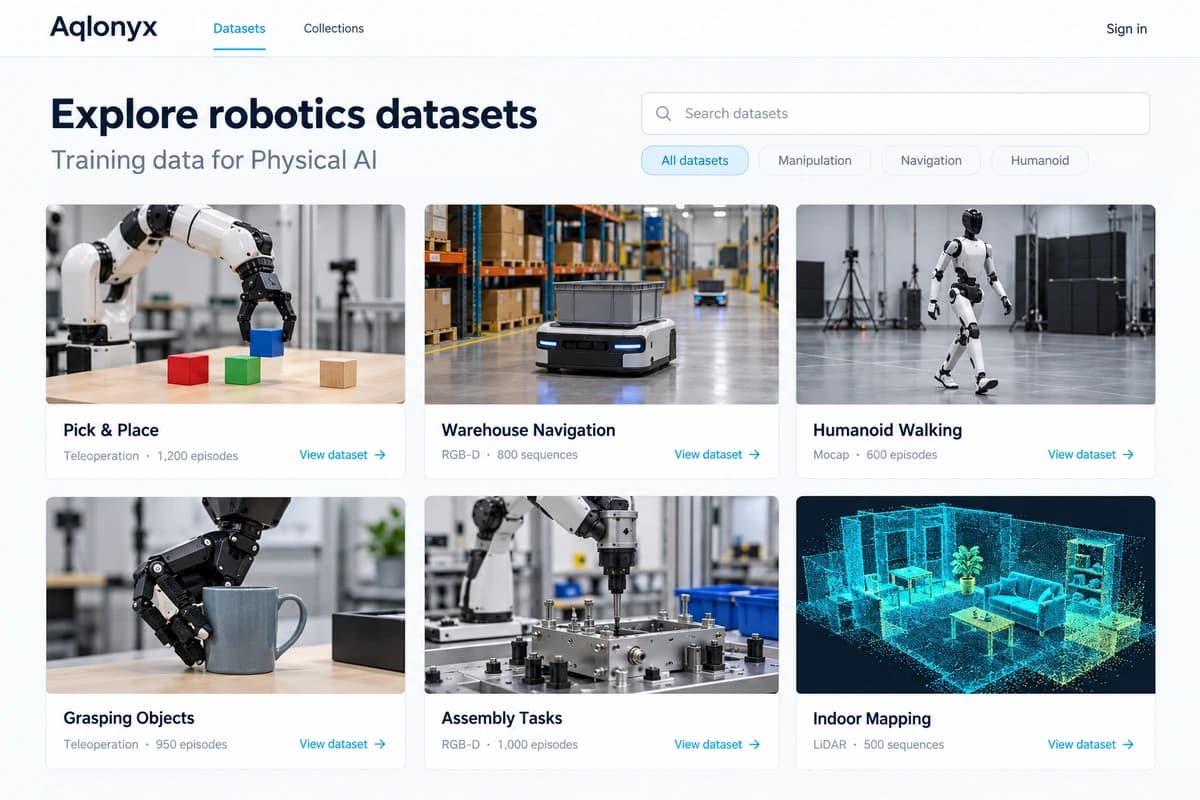
For AI labs and robotics companies, procuring third-party datasets from specialized collection programs or marketplaces is often 10x faster and 5x cheaper than building internal capture rigs across multiple robot embodiments.
Evaluating Sensor Modalities & Sampling Rates
Not all robotics data is created equal. When evaluating a dataset for foundation model training, verify that the following telemetry channels are strictly hardware-timestamped:
- Multi-Camera RGB Streams: Eye-in-hand cameras for close-up manipulation combined with static third-person views for spatial context (minimum 1080p, 30 FPS).
- 6-DoF End-Effector Poses: Cartesian positions (x, y, z) and quaternions (qx, qy, qz, qw) logged at 50Hz to 100Hz.
- Joint Positions & Velocities: Motor encoder readings across all degrees of freedom to capture kinematic dynamics.
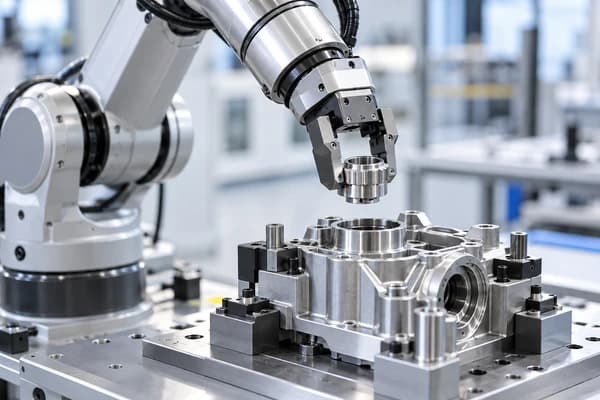
- Force-Torque Telemetry: 6-axis wrench data essential for contact-rich tasks like peg-in-hole assembly, wire harness routing, and polishing.
- Gripper Telemetry: Width, effort, slip detection, or vacuum pressure feedback.
Human Teleoperation vs. Synthetic Sim-to-Real Data
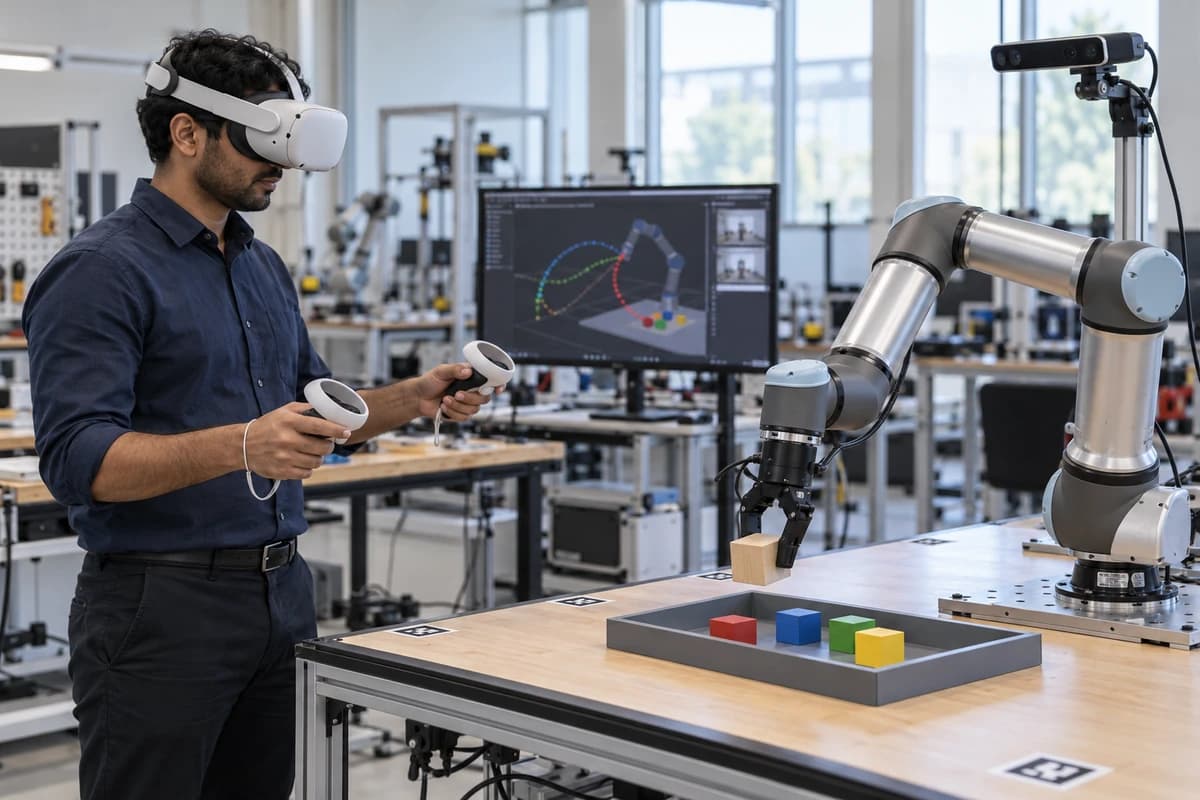
A robust training corpus balances real-world human teleoperation with domain-randomized synthetic data. Teleoperation captures subtle human dexterity, compliant motions, and natural recovery behaviors. Synthetic data (from Isaac Sim or MuJoCo) provides massive visual variance across lighting, textures, and camera perspectives.
Top-performing foundation models typically use a 70/30 split: bootstrapping spatial representations on synthetic data and fine-tuning manipulation skills on real teleoperation episodes.
Four Quality Metrics to Inspect Before Buying
Before licensing a dataset, evaluate these four critical indicators:
1. Task Success Rate: What percentage of recorded episodes successfully reached the terminal state? Look for >98% curated success rates.
2. Temporal Synchronization Jitter: Ensure camera frames and proprioceptive telemetry do not drift by more than 5ms over a 2-minute episode.
3. Scene & Object Diversity: How many distinct object instances, table heights, and background environments were captured?
4. Anonymization & Privacy: Confirm that bystanders, faces, and proprietary facility marks have been pseudonymized or blurred in accordance with GDPR and PDPL requirements.
Licensing Models and Commercial IP Clearance
Always verify the commercial licensing structure. Many university datasets restrict use to non-commercial research. Commercial enterprises require perpetual, irrevocable, worldwide licenses that explicitly permit training proprietary weights and deploying downstream commercial solutions.